The Definitive Guide: 8 Bathroom Decoration Trends You Should Try Right Now
By [SEO Journalist Name] | [Date], [City]
The modern bathroom is no longer a purely utilitarian space; it has evolved into a private sanctuary—a crucial wellness hub dedicated to relaxation and self-care. As homeowners increasingly seek refuge from the external world, bathroom decoration trends are shifting toward sophisticated materials, calming color palettes, and integrated technology designed for comfort. If you are planning a refresh, a full renovation, or just seeking inspiration, understanding the current direction of interior design is essential. We dive deep into the eight most impactful bathroom trends dominating design magazines and luxury homes, offering actionable insights for your next project.
1. The Rise of Biophilic Design: Bringing Nature In
Biophilic design, the concept of integrating nature into the built environment, is arguably the most dominant trend in modern bathroom aesthetics. This movement is driven by a desire for calm and a scientific understanding that proximity to nature reduces stress. Designers are leveraging large windows to maximize natural light and views, but the trend extends far beyond external scenery.
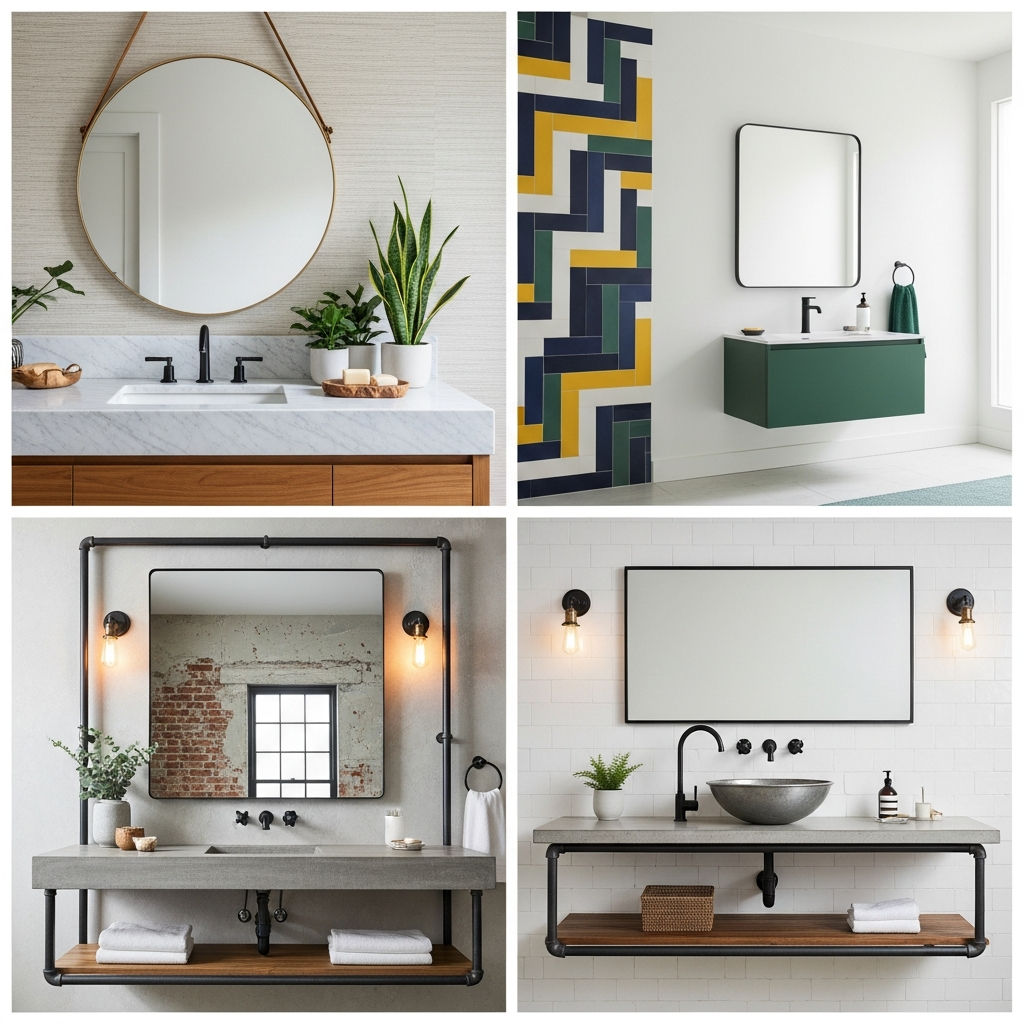
Key elements include the incorporation of humidity-loving plants—such as ferns, snake plants, and pothos—and the use of natural materials like unpolished stone and warm woods. Look for stone vessel sinks that mimic river rocks, and the integration of rain shower heads that recreate the feeling of being outdoors. The goal is to make the act of bathing feel less like a chore and more like a retreat into a hidden grotto.
2. Large-Format Slabs and Seamless Surfaces
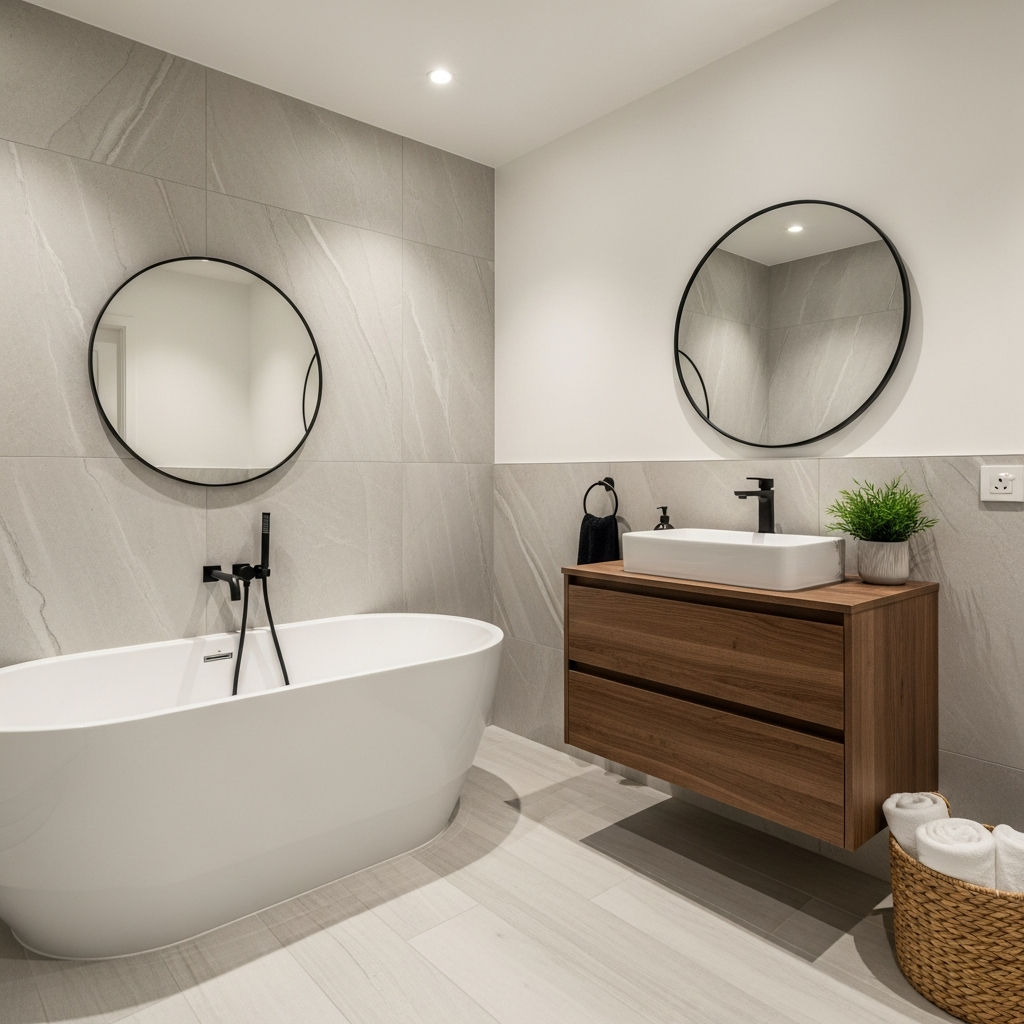
Say goodbye to excessive grout lines. One of the most significant shifts in material selection is the move toward massive, large-format porcelain and natural stone slabs. These slabs can cover entire shower walls or bathroom floors with minimal seams, creating an aesthetic that is incredibly clean, sophisticated, and, crucially, easier to maintain.
This trend allows for dramatic veining and patterning—often mimicking Calacatta marble or rich quartzite—to flow uninterrupted, lending a feeling of luxurious expanse even in smaller spaces. When selecting materials, designers are favoring matte finishes over high gloss. The matte look diffuses light beautifully, reduces glare, and provides a tactile, grounded feel that aligns perfectly with the current preference for earth-toned interiors.
3. Fluted Textures and Geometric Detailing
Detailing is becoming paramount, and smooth, flat surfaces are being supplemented—or replaced—by intricate fluting and reeded textures. Often seen on vanity fronts, shower glass, and even ceramic tilework (particularly Zellige tiles), fluting adds immediate dimension and architectural interest.
These subtle vertical lines catch light in interesting ways and introduce a soft, rhythmic movement to the design. This trend is a perfect example of how small decorative choices can elevate the entire room. Complementing the fluting are sophisticated geometric patterns, often used sparingly in floor tiles or backsplashes, adding a layer of contemporary complexity without overwhelming the space.
4. The Warmth of Earthy Neutrals and Deep Greens
For decades, the standard bathroom palette revolved around crisp white and sterile grey. The current trend firmly rejects this cold approach, embracing deeply comforting colors. Earthy neutrals—think mushroom, taupe, terracotta, and soft beige—have replaced cool tones as the foundational colors.
Furthermore, deep forest greens and olive hues are seeing a massive resurgence. These colors work perfectly with the biophilic trend, creating a cocooning atmosphere that feels both calming and rich. When used on cabinetry or accent walls, these colors provide a dramatic contrast to brass or aged bronze hardware, further enhancing the feeling of warmth and luxury.
5. Mixed Metals and Aged Finishes
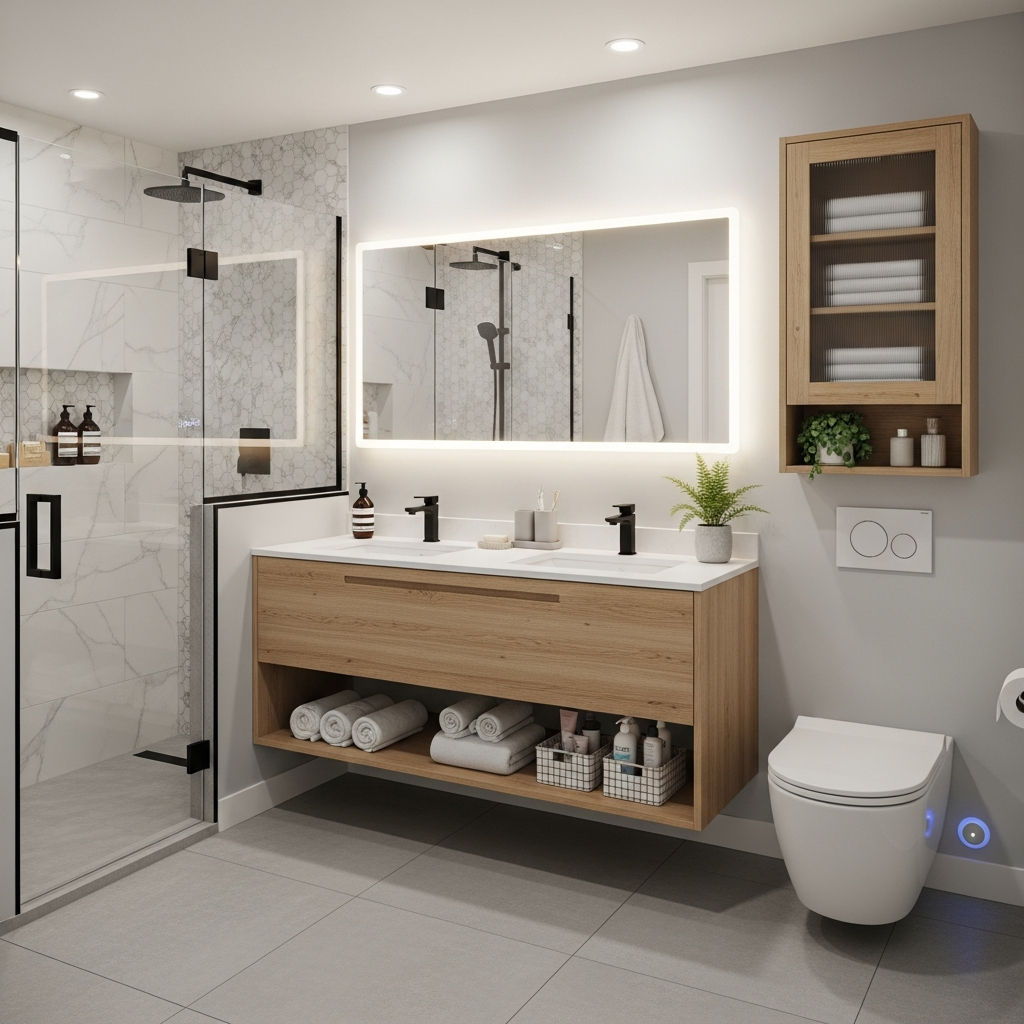
The days of matching every fixture finish precisely are over. Designers are now confidently mixing metals to create layered, bespoke looks. The biggest winners in the hardware category are aged bronze, matte black, and unlacquered brass.
Matte black offers a modern, high-contrast pop against light tiles, while unlacquered brass is cherished for its ability to develop a beautiful patina over time, telling the story of the home. The key to mixing metals successfully is coherence: stick to a maximum of two primary finishes, ensuring they share the same undertone (either warm or cool), and use one finish for the primary fixtures (like the faucet) and the secondary finish for accessories (like towel bars or lighting).
6. The Japandi Influence: Minimalism and Craftsmanship
Japandi—the seamless fusion of Japanese minimalism and Scandinavian functionality—continues to shape interiors, emphasizing clean lines, natural materials, and superb craftsmanship. In the bathroom, this translates to functional, clutter-free spaces that prioritize peace.
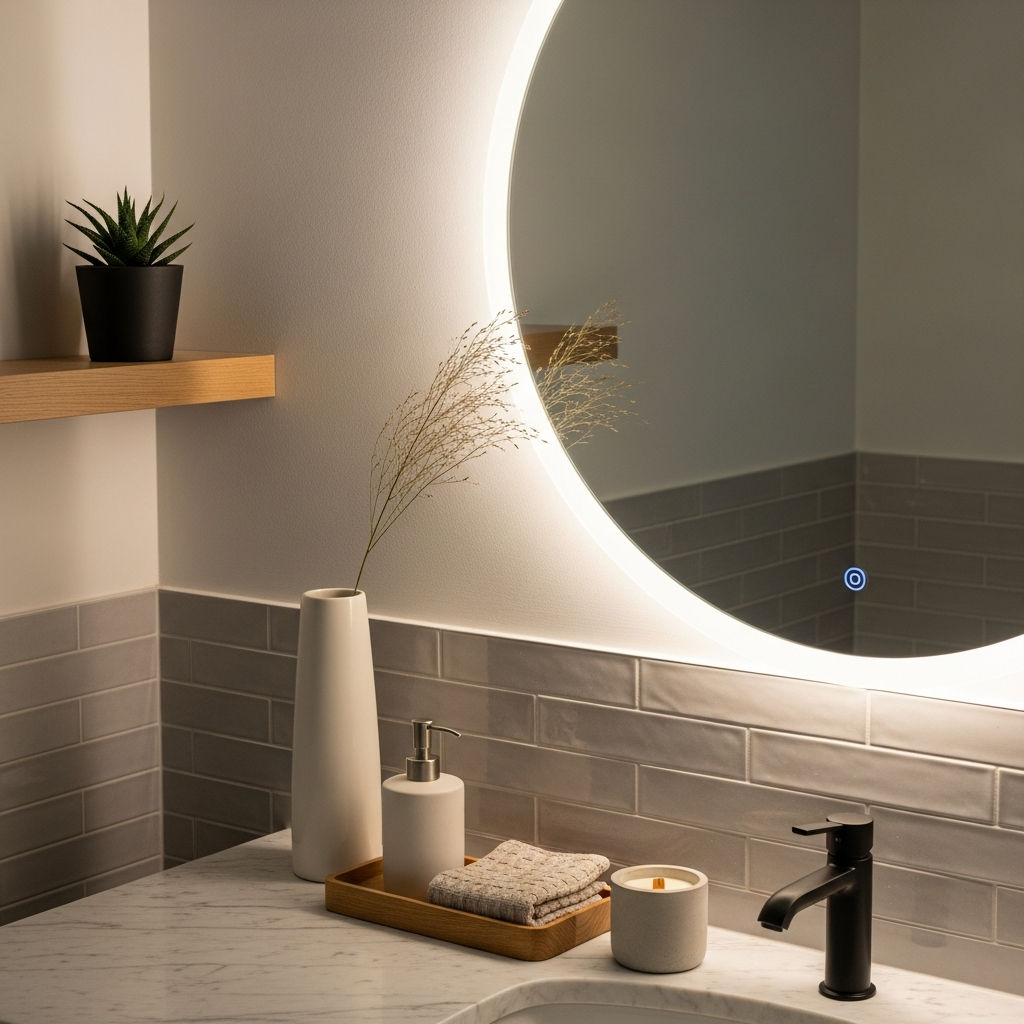
Think floating vanities made of light oak, minimal open shelving, and a strict adherence to the principle that everything in the room must be beautiful and necessary. Lighting fixtures are often simple but sculptural, featuring soft, diffused light sources that avoid harsh glare. This approach encourages relaxation by removing visual noise and focusing on the quality of materials.
7. The Fully Integrated Smart Bathroom
Wellness technology has moved from the gym into the bathroom. Modern design now incorporates features that enhance comfort and hygiene seamlessly. The flagship product leading this charge is the smart toilet, complete with integrated bidet functions, automatic lids, heated seats, and specialized air deodorizers.
Beyond the commode, innovations include anti-fog smart mirrors that feature integrated lighting and Bluetooth connectivity for music, therapeutic steam showers with chromotherapy (color light therapy) settings, and digital interfaces that precisely control water temperature and pressure. While these elements represent a significant investment, they dramatically elevate the daily experience and appeal to the homeowner focused on holistic health.
8. Statement Lighting as Functional Art
For too long, bathroom lighting was treated as merely functional. Today, lighting fixtures are being employed as statement pieces—the “jewelry” of the room. Designers are moving beyond the standard vanity light bar in favor of architectural sconces, dramatic chandeliers, or delicate pendant lights hung strategically beside or over the mirror.
Crucially, lighting must be layered. General ambient light (recessed cans), task lighting (around the mirror), and accent lighting (to highlight artwork or textures) work together to create depth. Opt for fixtures that cast a warm, flattering light (ideally 2700K to 3000K) and ensure dimmers are installed to easily transition the space from an invigorating morning prep area to a relaxing evening spa.
Transforming Your Sanctuary
Embracing these contemporary bathroom decoration trends allows you to transform a basic functional space into a genuine personal retreat. Whether you are captivated by the calming influence of biophilic design, the seamless sophistication of large-format slabs, or the cutting-edge luxury of integrated smart technology, the overarching theme is personalization and wellness.
When approaching your renovation or decorative update, remember that even small adjustments—such as changing out the hardware to aged bronze or adding a few sculptural plants—can bring your bathroom into alignment with the latest luxury standards. Focus on textures, natural light, and creating an atmosphere of undisturbed tranquility. The bathroom is arguably the most important room for self-care; invest in making it a space you truly enjoy.
Tags: Statement Tile, Biophilic Design, Matte Black Hardware, Spa-like Retreat, Floating Vanity