How to Master Home Improvement in 33 Days: The Ultimate DIY Guide
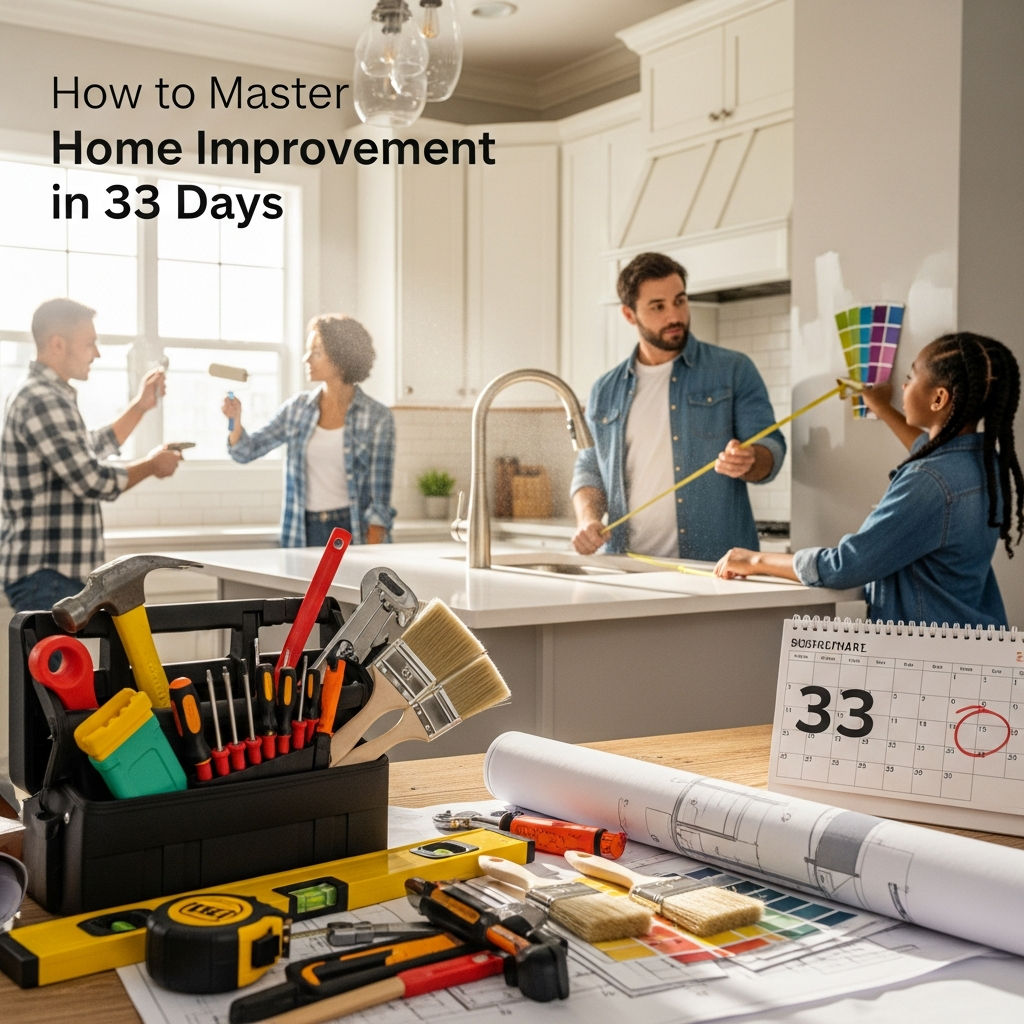
Home improvement is often viewed as a daunting, lifelong endeavor filled with expensive contractor bills and unfinished projects. However, mastering the art of the DIY renovation doesn’t require a decade of apprenticeship. With a structured approach, the right tools, and a commitment to learning, you can transform from a novice to a confident home improver in just over a month. This 33-day guide is designed to build your skills progressively, ensuring you have the knowledge to enhance your living space and increase your property value.
Phase 1: The Foundation and Essential Skillsets (Days 1–7)
Before you pick up a sledgehammer, you must understand the mechanics of your home. The first week is dedicated to preparation, safety, and the “unsexy” but vital aspects of home maintenance.
Day 1–2: Audit and Inventory
Walk through every room of your house with a notebook. Identify leaks, cracks, outdated fixtures, and peeling paint. Prioritize these tasks based on urgency and budget. On Day 2, build your essential toolkit. At a minimum, you need a high-quality cordless drill, a level, a measuring tape, a hammer, a set of screwdrivers, and safety gear (goggles and masks).
Day 3–5: Understanding Your Home’s Systems
Spend these days learning the “bones” of your house. Locate your main water shut-off valve, the electrical breaker box, and the HVAC filters. Research how to identify load-bearing walls versus partition walls. Understanding how your home breathes and functions prevents costly mistakes during the renovation process.
Day 6–7: Patching and Prepping
The secret to a professional finish is the prep work. Practice patching holes in drywall using spackle and a putty knife. Learn the art of sanding—moving from coarse to fine grit—to create a seamless surface. Mastery of the “sand-patch-sand” cycle is the cornerstone of all interior aesthetics.
Phase 2: Interior Aesthetics and Surface Mastery (Days 8–17)
Once you understand the structure, it is time to focus on the visual impact. This phase focuses on the most high-ROI (Return on Investment) activities: paint and trim.
Day 8–11: Professional Painting Techniques
Painting is the most accessible home improvement skill, yet many do it poorly. Spend these four days mastering “cutting in” without painter’s tape. Learn how to load a roller correctly to avoid “ropes” or streaks. Practice painting different surfaces: walls, ceilings, and wood trim. Remember, 70% of a good paint job is the cleaning and taping that happens before the lid even opens.
Day 12–14: Flooring Fundamentals
Replacing flooring can change the entire vibe of a room. Focus your learning on Luxury Vinyl Plank (LVP) or laminate flooring. These “click-lock” systems are DIY-friendly. Learn how to calculate square footage, allow for expansion gaps, and use a miter saw to make clean cuts around door jambs.
Day 15–17: Cabinetry and Hardware Upgrades
You don’t need a full kitchen remodel to make a difference. Learn how to remove, sand, and refinish cabinet doors. Mastering the installation of new hardware—knobs and pulls—requires precision. Create a “jig” (a template) to ensure every handle is perfectly aligned, a hallmark of professional craftsmanship.
Phase 3: Plumbing, Electrical, and Functional Upgrades (Days 18–26)
This phase moves into the technical heart of the home. While major electrical and plumbing work should be left to licensed professionals, the “handyman” level of these skills is well within your reach.
Day 18–20: Basic Plumbing Repairs
Learn how to swap out a kitchen or bathroom faucet. This involves understanding supply lines, P-traps, and the proper use of plumber’s tape. Practice clearing a slow drain using a zip-tool or an auger. By Day 20, you should feel confident replacing a toilet’s internal flapper and fill valve.
Day 21–23: Electrical Basics and Lighting
Safety is paramount here. Learn how to use a voltage tester to ensure power is truly off. Practice swapping out an old, yellowed light switch for a modern rocker switch or a dimmer. Master the installation of a new light fixture or a ceiling fan. These small changes can dramatically improve the “mood” and energy efficiency of your home.
Day 24–26: Tiling and Backsplashes
Tiling is a skill of patience. Start small with a kitchen backsplash. Learn about thin-set mortar, spacers, and the messy but rewarding process of grouting. A well-tiled backsplash is a major selling point for any home and teaches you the precision required for larger bathroom projects later on.
Phase 4: Curb Appeal and Exterior Excellence (Days 27–30)
The exterior of your home provides the first impression. Even if the inside is a palace, a neglected exterior lowers perceived value. Mastering the outside requires a different set of tools and techniques.
- Day 27: Power Washing and Surface Cleaning. Learn the different nozzle pressures to avoid damaging wood siding or stone. Clean the driveway, walkways, and siding.
- Day 28: Landscaping and Edge Control. Master the art of the “clean edge” along walkways. Learn about mulch depth and drought-resistant plants that thrive in your specific climate zone.
- Day 29: Door and Window Maintenance. Learn how to caulk windows to improve insulation. Sand and repaint your front door—it is the focal point of your home’s exterior.
- Day 30: Deck and Fence Care. Learn to identify wood rot and how to apply a weather-resistant stain. This preserves the structural integrity of your outdoor living spaces.
Phase 5: The Final Polish and Maintenance Mindset (Days 31–33)
The final three days are about moving from “doing projects” to “mastering the home.” This requires a shift in perspective from reactive repairs to proactive maintenance.
Day 31: The Deep Detail
Go back through your home and look for the “unfinished 5%.” This includes caulking the baseboards, touching up paint nicks, and ensuring all doors swing smoothly without squeaking. It is the attention to these tiny details that separates a DIYer from a master.
Day 32: Creating a Maintenance Schedule
Mastery means knowing when things need attention before they break. Create a digital or physical calendar for:
- Quarterly HVAC filter changes.
- Biannual gutter cleaning.
- Annual water heater flushing.
- Monthly smoke detector testing.
Day 33: The Future Project Roadmap
On your final day, reflect on the skills you have acquired. You now know how to paint, tile, fix leaks, and update electrical fixtures. Use this confidence to plan a larger “Master Project” for the coming year, such as a bathroom remodel or a deck build. You are no longer a guest in your home; you are its steward.
Common Mistakes to Avoid During Your 33-Day Journey
Even with a plan, beginners often fall into traps. To truly master home improvement, you must be aware of these pitfalls:
- Underestimating Time: Every DIY project takes twice as long as you think it will. Always factor in “buffer time” for trips to the hardware store.
- Buying Cheap Tools: A cheap drill will strip screws and frustrate you. Buy the best tools you can afford; they are an investment that pays for itself in avoided mistakes.
- Ignoring Local Codes: Before doing anything structural or majorly electrical, check your local building codes. Some work requires a permit to ensure the safety and legality of the renovation.
- Skipping the Safety Gear: Dust masks, ear protection, and safety glasses are non-negotiable. Mastering home improvement isn’t worth a trip to the emergency room.
Conclusion: The Master’s Mindset
Mastering home improvement in 33 days isn’t about knowing how to build a house from scratch; it’s about developing the confidence to tackle problems and the wisdom to know your limits. By following this structured path, you have built a foundation of skills that will save you thousands of dollars and turn your house into a personalized sanctuary. The 33-day challenge is just the beginning of your journey as a capable, self-reliant homeowner.